

Coastal Defence Is Helping Protect Cleveleys Beach |
How new rock groynes are helping stabilise the beach and strengthen the seafront |
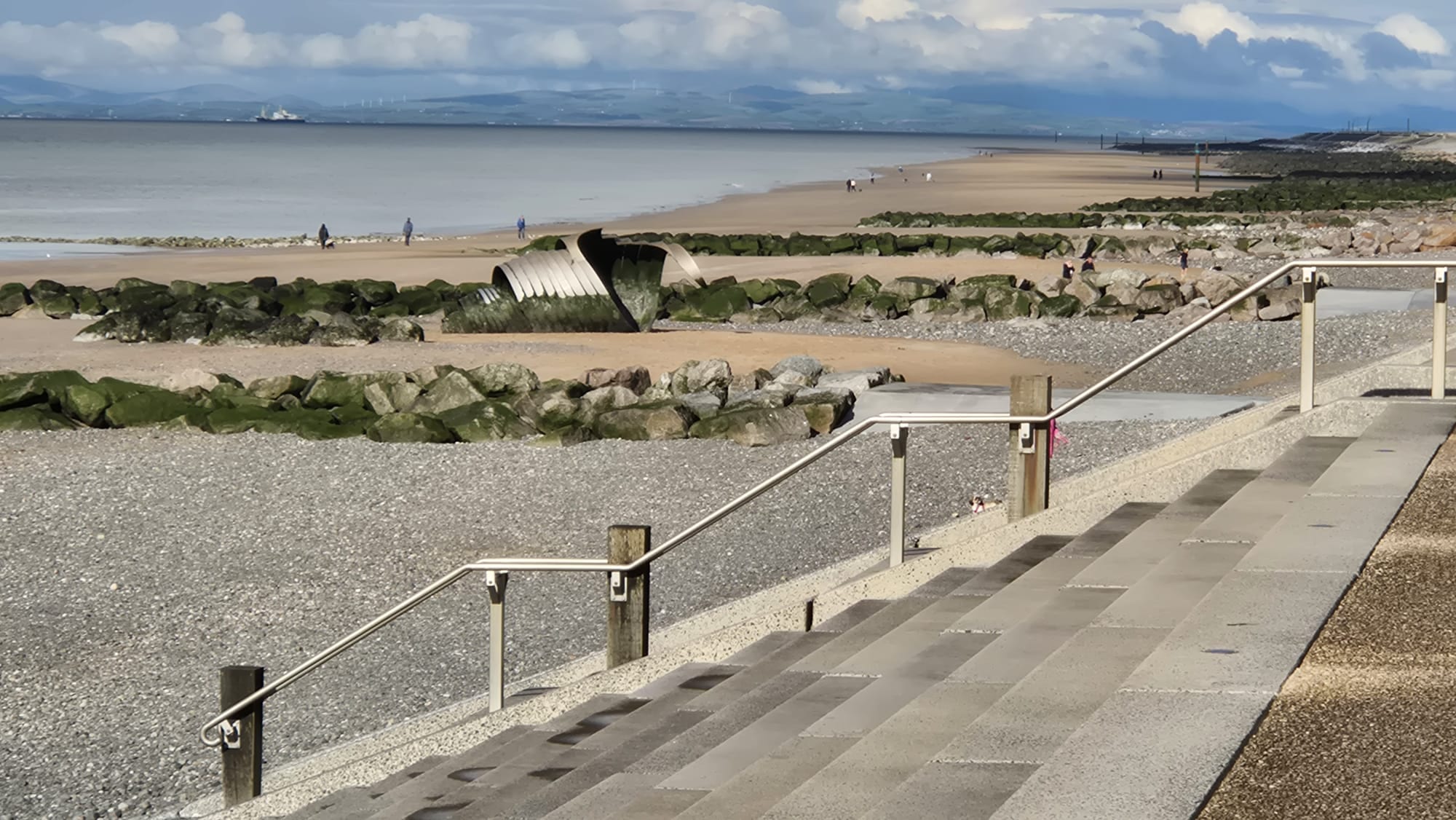
Anyone taking a stroll along Cleveleys seafront can see that the beach is more than a beautiful view; it is an important part of the town’s character and a natural first line of defence against the sea.
The new rock groynes are an important part of the work to help protect this much-loved coastline, giving residents and visitors another reason to feel positive about the future of Cleveleys beach.
What exactly are the groynes for?
Groynes are structures that extend out from the shore and help manage the movement of sand, shingle and pebbles along the coast.
At Cleveleys, the new rock structures are designed to reduce turbulence close to the shore and help beach material settle and build up, creating a more stable beach over time.
That matters because a higher, healthier beach can absorb some of the energy of incoming waves before they reach the sea defences behind it.
In simple terms, the beach itself plays a valuable role in coastal protection, and the groynes are intended to help keep that natural buffer in place.
A major investment in our coastline
The groynes form part of the wider Wyre Beach Management Scheme, a major coastal project delivered by Wyre Council in partnership with its project partners and supported by government funding.
The scheme has been designed to reduce the risk of flooding and coastal erosion for more than 11,000 properties and important infrastructure across the area.
Along the Cleveleys seafront, the rock groynes replace older wooden breakwaters where required, creating a stronger and more durable approach to managing the beach.
Rock protection has also been installed at the foot of sections of sea wall, helping to guard against erosion if beach levels fall.
It is a reminder that protecting a coastline takes more than one wall or one line of rocks. Different elements work together, with the beach, groynes and sea defences each playing their part.
Helping the beach do its job
One of the encouraging things about this kind of work is that the results can become more visible as nature takes its course.
Sand and shingle can gather around the groynes, helping beach levels to recover and settle into the spaces between them.
The beach will still change with the seasons, tides and storms, so no coastal scheme can promise that every part of the shoreline will look the same all year round.
But helping beach material stay in place can reduce the amount of wave energy reaching the sea wall during high tides and unsettled weather.
Each groyne also includes a crossover ramp, designed to help people move across the structure when conditions allow.
As always, visitors should take care near the water, check local safety notices and follow any temporary access restrictions, particularly during stormy weather or around high tide.
Protecting more than a view
Cleveleys beach is a place for fresh-air walks, family days out, watching the changing sea and enjoying the open views across the water.
It also sits beside homes, businesses, roads and public spaces that are important to everyday life in the community.
Investment in coastal protection is therefore about more than engineering; it is about helping safeguard the places where people live, work and spend time together.
The new groynes may look rugged against the sand and sea, but their purpose is practical and long-term: to help stabilise the beach and support the wider defences that protect the coastline.
A positive step for Cleveleys
Our coastline will always be shaped by nature, and living beside the sea means respecting its power as well as enjoying its beauty.
The new rock groynes are a significant step in giving Cleveleys beach a better chance of retaining the sand and shingle that help protect the shore.
For residents and visitors alike, that is encouraging news: investment is being made in the future of our seafront, helping preserve a treasured local asset for generations to come. |


9 Comments
Join the conversation
The beach has looked a bit thin for years so hopefully the sand does start to build back up around them. My kids used to love it down there. Fingers crossed it makes a difference.
sandyboots_FY5I remember when the beach was a lot fuller too. My parents have photos from the 80s and there was so much more sand. Hopefully these do the job and it starts coming back.
We share your optimism, as the article notes, sand and shingle can naturally gather around the groynes over time, helping beach levels recover between them, so hopefully those family days out will feel even better as the beach builds back up.
11,000 properties at risk sounds like a lot. Would be good to know which roads and areas are included in that. Not everyone lives right on the seafront.
Phil MarsdenGood point. I think Fleetwood and parts of Thornton are included as well, not just the seafront streets. Worth checking the Wyre Council website, they did publish a map at some point.
That's a really fair point, the scheme is designed to protect more than 11,000 properties across the wider Wyre area, which does extend well beyond the immediate seafront, covering homes, businesses and key infrastructure further inland too. For detailed boundary information, Wyre Council's project pages would be the best place to find the specifics for your area.
Walked past the new groynes last weekend and they look really solid compared to those old wooden ones that were falling apart. Nice to see money actually being spent on something useful for a change.
It's great to hear a first-hand impression, and you're right that the rock structures are designed to be a stronger and more durable replacement for the older wooden breakwaters, built to last and to do a serious job for the coastline.
Janet R.Same, I noticed them a few weeks back. Those old wooden ones had been rotting away for years, honestly surprised they lasted as long as they did. Looks much better now.